Skip to content
Utica Foundation

Serving Utica and nearby areas

Water in Basement in Utica, NY

Water in your Utica basement after rain or snowmelt means the soil outside is soaked and finding a way in, and a free inspection shows where it enters and what will stop it.

Book a free foundation inspection

Tell us what you are seeing. A local specialist calls you back the same business day.

Why basements leak and walls move in Utica

Utica sits in the Mohawk Valley on soils made from ground-up shale, with wetter clay soils in low spots. Winters bring about 100 inches of snow and dozens of freeze-thaw swings, and Sauquoit Creek and the Mohawk River flood often. About half the city's homes were built before 1940, so many basements are old stone, brick or block that has taken a century of wet springs.

  • A hundred inches of snow

    The Utica area averages about 101.8 inches of snow a year, based on 1991 to 2020 normals. When it melts each spring, the soil next to basement walls stays soaked for weeks.

  • Soil that drains slowly

    USDA describes the low, wet soils in this Mohawk Valley family as poorly drained, with slow water movement in the lower subsoil. Water that cannot soak down moves along the wall instead.

  • Rivers and creeks that rise

    In December 2023, Sauquoit Creek spilled into yards and basements on Sauquoit Street in Whitesboro. The City of Utica says parts of North Utica are prone to flooding from streams, the Mohawk River and the Erie Canal.

What it costs

Typical published ranges for Utica. The contractor's written estimate is the price, and the inspection is free.

WorkTypical range
Inspection and written estimate Free
Interior drain $60 to $120per linear foot
Sump pump, installed $800 to $2,000
Battery backup added to a sump pump $150 to $250
Interior waterproofing, whole job $2,000 to $6,000
Exterior waterproofing, whole job $7,000 to $15,000
Waterproof wall coating $1 to $8per sq ft

See typical foundation repair prices in Utica

Where the water shows up

Where you find the water is the best clue to where it comes from. Before anyone tears anything out, look at the pattern.

A wet line along the bottom of the wall

Where the wall meets the floor

Water coming up through floor cracks

Or around a floor drain

One wet spot on a wall

Under a downspout or a low spot in the yard

Water running down from a crack

In a poured or block wall

Damp, dark mortar joints

In an old stone or brick wall

White, chalky powder

On the wall where water dried

A sump pump that runs for days

After the snow melts

A musty smell

And peeling paint, even with no puddles

Why Utica basements take on water

The spring melt

The Utica area averages about 101.8 inches of snow a year. In March and April it melts fast, often with rain on top, while the ground deeper down is still frozen. Water cannot soak in, so it moves sideways through the top layers of soil, straight toward your basement wall.

Slow-draining soil

Low lots around Utica sit on a heavy, poorly drained clay soil. Water stays in it for a long time. When the soil next to the wall stays full, water builds up pressure and pushes through any crack, joint or gap.

Rivers and creeks

Homes near Sauquoit Creek, the Mohawk River and the low parts of North Utica deal with high water after big storms. In December 2023, Sauquoit Creek spilled into basements on Sauquoit Street in Whitesboro. Near water, the ground under the basement can fill from below, not just from the side.

Old walls with many joints

About half of Utica's homes are more than 80 years old. Stone, brick and block walls have hundreds of mortar joints, and old mortar wears out. Each worn joint is a path for water.

When it is minor and when it is not

Often minor: a damp spot under one downspout, light dampness only in the worst week of spring, or condensation on cold walls in summer. Fix the gutters, extend the downspouts and slope the soil away. Then watch it.

Worth fixing soon: water every spring, water at the floor edge, a sump pump that cannot keep up, or water through a crack that keeps getting wider.

Urgent: standing water near the furnace, water heater or electrical panel; water with a wall that is bowing or cracking sideways; or water that rises fast during a storm. Keep away from standing water near electrical equipment.

How it is usually fixed

Gutters, downspouts and grading

The cheapest fix, and the first one to check. Carry downspout water at least several feet from the wall and slope the soil away.

Crack repair

A single leaking crack in a poured wall can often be sealed from inside.

Interior drain and sump pump

A channel is cut along the inside edge of the floor, a drain pipe catches water at the base of the wall, and a pump sends it outside. This is the most common fix for water at the floor edge.

Exterior waterproofing

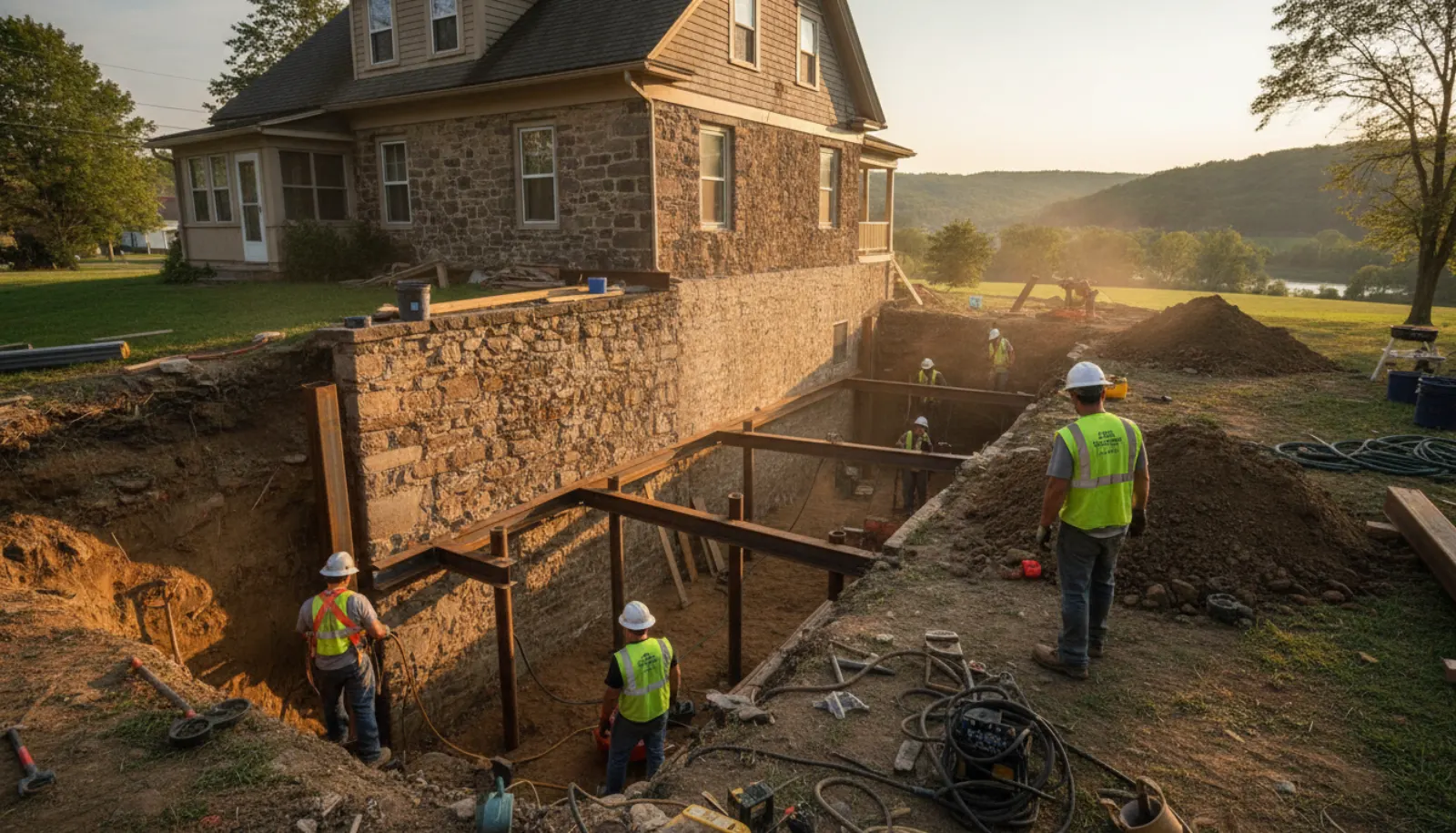
The crew digs down outside, adds a membrane and a drain at the footing. It costs more but stops water before it reaches the wall.

Repointing old masonry

In stone and brick basements, worn joints are cleaned out and refilled with a soft, lime-rich mortar. The National Park Service notes that drainage problems should be fixed before new mortar goes in.

What it costs

Typical ranges from published national cost guides. Your price depends on the length of wall, access, how deep the digging goes and whether the floor has to be opened.

What to do before the inspection

  1. Take photos of the water each time it shows up, with the date.
  2. Note the weather: heavy rain, fast snowmelt, or dry weather. Water in dry weather can point to a pipe.
  3. Walk outside in the rain. Look for overflowing gutters and downspouts that dump next to the wall.
  4. Move boxes off the floor and away from the walls.
  5. If you have a sump pump, pour a bucket of water in the pit to make sure it turns on.

Frequently asked questions

Why does my basement only leak in the spring?

Spring is when the snow melts and the rain starts at the same time, often while the ground below is still frozen. The water has nowhere to go but sideways, toward your basement. A leak that only shows up in March and April is common in Utica.

Is water coming up through the floor different from the walls?

Yes. Water at the floor edge or through floor cracks usually means water is building up under the slab. That often needs an interior drain and a sump pump. Water in one spot on a wall more often points to a gutter, a crack or a pipe.

Will homeowners insurance pay for a wet basement?

FEMA notes that standard homeowners policies usually do not cover flood damage. Seepage over time is also often excluded. A burst pipe may be covered. Check your own policy and ask your agent.

Can I just paint the walls with waterproof paint?

Coatings can help with light dampness on a sound wall. They do not stop water under pressure, and on old stone or brick walls they can trap moisture in the masonry. Find where the water comes from first.

My sump pump runs all the time. Is that bad?

It means a lot of water is reaching the pit, which is common in wet springs and in low spots near the river and creeks. Make sure the pump is sized right, the discharge drains well away from the house, and you have a backup if the power goes out.

How long does basement waterproofing take?

An interior drain and sump pump is often done in one to three days. Outside digging takes longer and is easier when the ground is not frozen.

Find out where the water gets in

Call (315) 322-9152 or send the short form. A local Utica crew will trace the water and give you a written price to stop it.

(315) 322-9152 Free inspection