Skip to content
Utica Foundation

Serving Utica and nearby areas

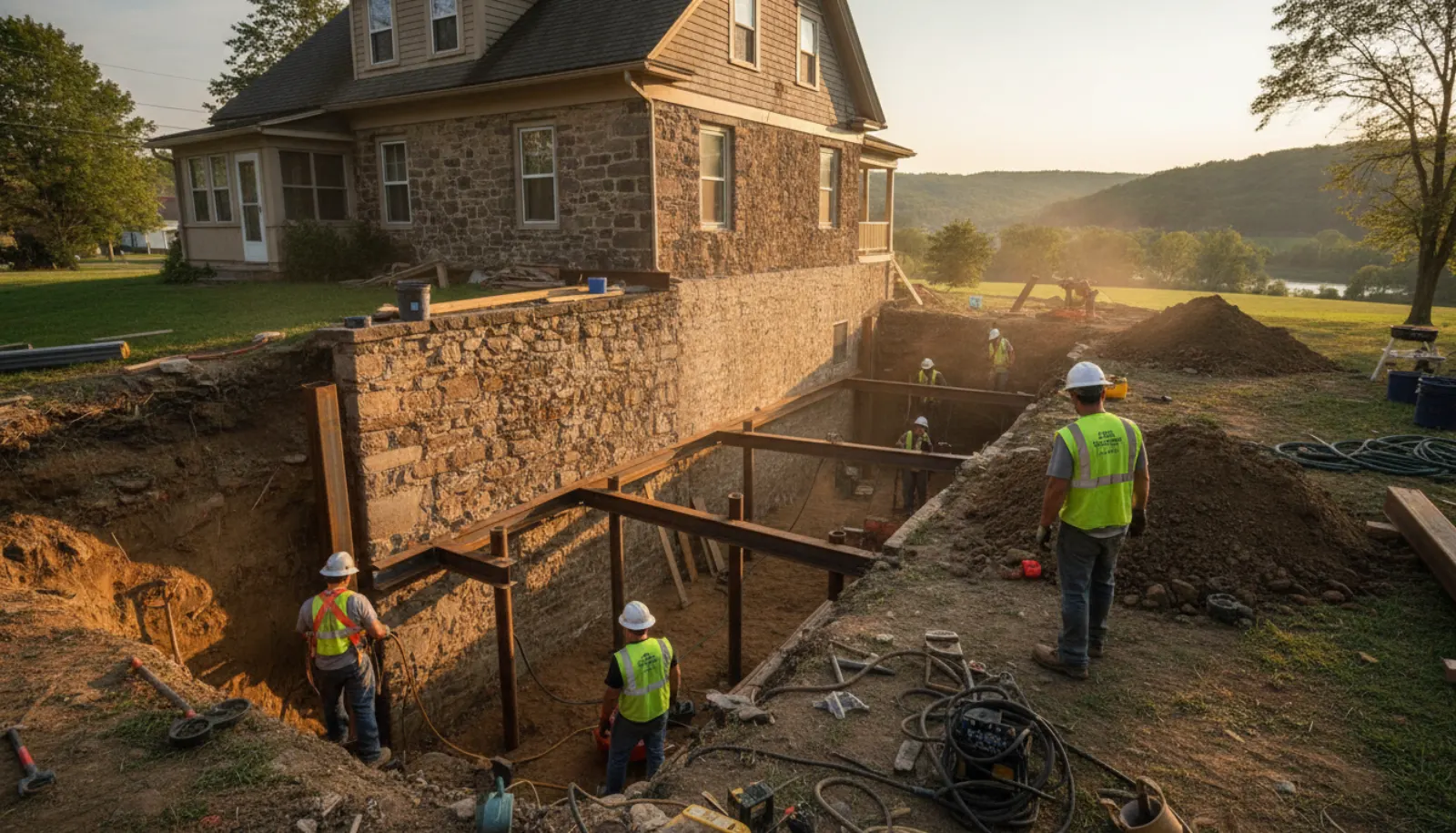
Crumbling Stone Foundation in Utica, NY

Mortar crumbling out of an old stone or brick foundation in Utica means water has been wearing the joints down, and a free inspection tells you whether the wall needs repointing or more.

Book a free foundation inspection

Tell us what you are seeing. A local specialist calls you back the same business day.

Why basements leak and walls move in Utica

Utica sits in the Mohawk Valley on soils made from ground-up shale, with wetter clay soils in low spots. Winters bring about 100 inches of snow and dozens of freeze-thaw swings, and Sauquoit Creek and the Mohawk River flood often. About half the city's homes were built before 1940, so many basements are old stone, brick or block that has taken a century of wet springs.

  • Half the homes are pre-war

    Census estimates for 2020 to 2024 show about half of Utica's homes were built in 1939 or earlier. Many of those sit on stone or brick basement walls laid in soft lime mortar.

  • Mortar wears out with water

    The Wisconsin Historical Society notes that mortar in buildings 100 years or older often breaks down, mostly from moisture. The National Park Service says leaking gutters and downspouts can wash mortar out.

  • Dozens of freezes a year

    The Utica-Oneida County station averages about 59 freeze-thaw cycles a year. Water in a worn joint freezes and swells, loosening the mortar a little more each time.

What it costs

Typical published ranges for Utica. The contractor's written estimate is the price, and the inspection is free.

WorkTypical range
Inspection and written estimate Free
Repointing, walls 8 ft or under $5 to $10per sq ft
Repointing, walls over 8 ft $10 to $25per sq ft
Tuckpointing, typical job $1,500 to $2,500
Most foundation repairs, national range $2,200 to $8,200
Structural engineer report $300 to $2,000

See typical foundation repair prices in Utica

What a crumbling foundation looks like

Old stone and brick basements do not fail like poured concrete. They do not usually crack in one long line. They wear away joint by joint.

Sandy mortar

That turns to powder when you rub it

Small piles of sand

On the floor along the base of the wall

Gaps between stones

Deep enough to push a finger or a screwdriver into

Loose stones or bricks

That wiggle or have fallen out

Dark, wet joints

After rain or in spring

White crust

On the stone where water dried

A bulge

Where a section of the wall has pushed in

Crumbling brick faces

That flake off in layers

Look closely near the top of the wall, under windows, and below any outside downspout. Those spots get the most water.

Why old Utica foundations wear out

Age

About half of the homes in Utica were built in 1939 or earlier. Many of those older homes sit on walls of fieldstone, cut stone or brick laid in lime mortar. Lime mortar was the right choice: it is soft and lets the wall breathe. But it is meant to be refilled every few generations, and many walls have never been.

Water

Mortar does not wear out from age alone. Water moving through it carries it away. The National Park Service names leaking gutters and downspouts as a common cause of washed-out mortar. With about 100 inches of snow a year in the Utica area, the soil against these walls is wet for weeks each spring.

Frost

The area sees about 59 freeze-thaw cycles in an average year. Water in a worn joint freezes, swells and pries the joint a little wider. Joints near the top of the wall, close to the cold outside air, wear fastest.

The wrong patch

Many old walls were patched over the years with hard cement mortar or a cement coat. Hard mortar does not flex and does not let water dry out. The water then leaves through the softer stone or brick instead, and the masonry around the patch starts to crumble.

Cosmetic or urgent?

Normal for an old basement: a little sand on the floor, some dampness in spring, joints that are a bit soft on the surface. Keep gutters clean and watch for change.

Time for repointing: mortar you can scrape out of the joints with a key or a screwdriver, loose stones, or sand that keeps piling up.

Get it checked soon: stones that have fallen out, a bulge, a section that moves when pushed, or new cracks upstairs above that wall. These can mean the wall is losing its strength, not just its surface.

How it is usually fixed

Fixing the water first

Gutters, downspouts and grading. The National Park Service says the source of water must be fixed before new mortar goes in, or the new joints wear out too.

Repointing

The crew rakes out the loose mortar to a solid depth and packs in new mortar in layers. On old stone, a soft, lime-rich mortar is usually the right match.

Resetting loose stones

Stones that have shifted are taken out, cleaned and set back in fresh mortar.

Rebuilding a section

Where a wall has bulged or lost many stones, that part is taken down and rebuilt, sometimes with the yard dug out on that side.

Interior drain

Some stone basements will always pass some water. A drain at the base of the wall and a sump pump can carry it away without washing out the joints.

What it costs

Repointing is priced by the square foot of wall. Typical national ranges are below. Basement walls are often under 8 feet, which keeps them in the lower band. Your price depends on how deep the joints are worn, the type of stone, and whether any section needs rebuilding.

What to do before the inspection

  1. Sweep the floor along each wall, then check in two weeks for new sand.
  2. Push a screwdriver into a few joints and note how deep it goes.
  3. Take photos of loose stones, bulges and wet spots.
  4. Check outside for gutters that spill over and downspouts next to the wall.
  5. Do not cover the wall with paint or cement before the inspection. It hides what the inspector needs to see.

Frequently asked questions

Is a stone foundation bad?

No. Many stone foundations in Utica have stood for more than 100 years and can stand for many more. They need the joints kept full and the water kept away. Problems start when mortar washes out and nobody refills it.

Can I repoint my stone foundation myself?

Small sections, yes, if you clean the joints out deep enough and use a soft mortar. This Old House says to rake out old mortar at least 3/4 inch deep and to call a pro for bulging or leaning walls, big cracks or serious water damage.

What mortar should be used on an old stone wall?

The National Park Service says new mortar should be softer than the stone or brick around it, which usually means a lime-rich mix. Hard cement mortar can crack the old masonry, because it does not give when the wall moves or dries.

Why is there sand on my basement floor under the wall?

That sand is usually old mortar washing out of the joints. It is a sign water is moving through the wall. A little is common in an old basement. A steady pile, or gaps you can push a finger into, means the wall needs work.

Should I parge or paint over the stone?

A cement coating can hide the problem and trap water in the wall. If a wall is coated, it should be a breathable, lime-based finish over sound joints, after the water source is fixed.

Is my stone basement wall going to fall in?

Most crumbling stone walls lose mortar slowly. The warning signs that need fast attention are stones that have shifted or fallen out, a bulge in the wall, or a section that moves when you push on it.

Get the old wall looked at

Call (315) 322-9152 or send the short form. A local Utica crew that works on old stone and brick will check every wall and give you a written price.

(315) 322-9152 Free inspection