Skip to content
Utica Foundation

Serving Utica and nearby areas

Sloping Floors in Utica, NY

A sloping floor in a Utica home can come from tired beams and joists or from a settling foundation, and a free inspection tells you which one and what it takes to level it.

Book a free foundation inspection

Tell us what you are seeing. A local specialist calls you back the same business day.

Why basements leak and walls move in Utica

Utica sits in the Mohawk Valley on soils made from ground-up shale, with wetter clay soils in low spots. Winters bring about 100 inches of snow and dozens of freeze-thaw swings, and Sauquoit Creek and the Mohawk River flood often. About half the city's homes were built before 1940, so many basements are old stone, brick or block that has taken a century of wet springs.

  • A century-old housing stock

    Census estimates for 2020 to 2024 show about half of Utica's homes were built in 1939 or earlier. In houses that old, beams and joists have carried the floors through close to a hundred winters.

  • Posts that heave

    The Utica-Oneida County station averages about 59 freeze-thaw cycles a year, and nearby Floyd lists a 48 inch frost line. Posts set on shallow pads in a crawl space or porch can heave up in winter and settle in spring.

  • Damp under the floor

    USDA describes the low soils in this area as poorly drained clay loam. A damp basement or crawl space keeps the wood under the floor wet, which softens beam ends and sill plates over time.

What it costs

Typical published ranges for Utica. The contractor's written estimate is the price, and the inspection is free.

WorkTypical range
Inspection and written estimate Free
Sagging floor repair $1,000 to $5,000
Floor joist replacement $100 to $300each
Support beam replacement $1,500 to $5,000per beam
Piers under a settled footing $1,000 to $3,000each
Structural engineer report $300 to $2,000

See typical foundation repair prices in Utica

What you will notice

Sloping floors usually creep up on you. Most people notice them when a ball rolls on its own or furniture starts to rock.

A ball or marble that rolls

To one side of the room

A dip in the middle of the floor

Often over the main beam

A floor that bounces

Or shakes when someone walks across it

Gaps under baseboards

At one end of the room

Doors that swing open or shut

On their own, or stick at the top corner

Cracks in plaster

Running out from door and window corners

Tile or grout that cracks

In a kitchen or bathroom

Cabinets or counters

Pulling away from the wall

Two very different causes

A sloping floor in Utica comes from one of two places. The fix and the price depend on which.

The framing under the floor

In most older Utica homes, the first floor sits on wood joists that rest on a main beam, held up by posts in the basement. Over a century, that wood can sag between posts. Posts can sink if they sit on thin pads or bare dirt. Joists may have been cut for old plumbing or heating pipes. Beam ends and sill plates can soften where the basement stays damp.

When the framing is the cause, the floor usually dips in the middle or bounces, and the basement walls look straight.

The foundation itself

If a footing under one corner or one wall has settled, the whole side of the house tips. The floor slopes toward that side, and you often see stair-step cracks in the basement wall or outside brick in the same spot.

When the foundation is the cause, the slope runs toward one wall, not the middle, and doors and windows on that side of the house start to stick.

Why it is common here

About half of Utica's homes were built in 1939 or earlier. That is close to a century of loads on the same wood. The area also sees about 59 freeze-thaw cycles in a typical year. Posts on shallow pads in crawl spaces and porches can heave up with the frost and settle back unevenly. And in low spots, the heavy, slow-draining clay soil keeps basements and crawl spaces damp, which wears on the wood under the floor.

Cosmetic or urgent?

Usually just age: a mild slope that has been there for years, with no bounce, no new cracks and doors that work fine.

Worth checking soon: a floor that bounces, a dip that is getting deeper, new cracks in plaster or tile, or doors that started sticking this year.

Check it right away: a post that is leaning or cracked, a beam that has split, soft or crumbling wood where the beam sits on the wall, or a floor that dropped quickly. Keep heavy furniture and appliances off that area until it is looked at.

How it is usually fixed

New or added posts

Steel or wood posts on proper footings are added under the beam to shorten the span and stop the sag.

A new or doubled beam

A beam that has cracked or sagged is replaced or reinforced.

Sistering joists

New boards are fastened alongside weak joists to stiffen them.

Slow leveling

The floor is raised a little at a time with jacks, then held on the new posts.

Piers under the footing

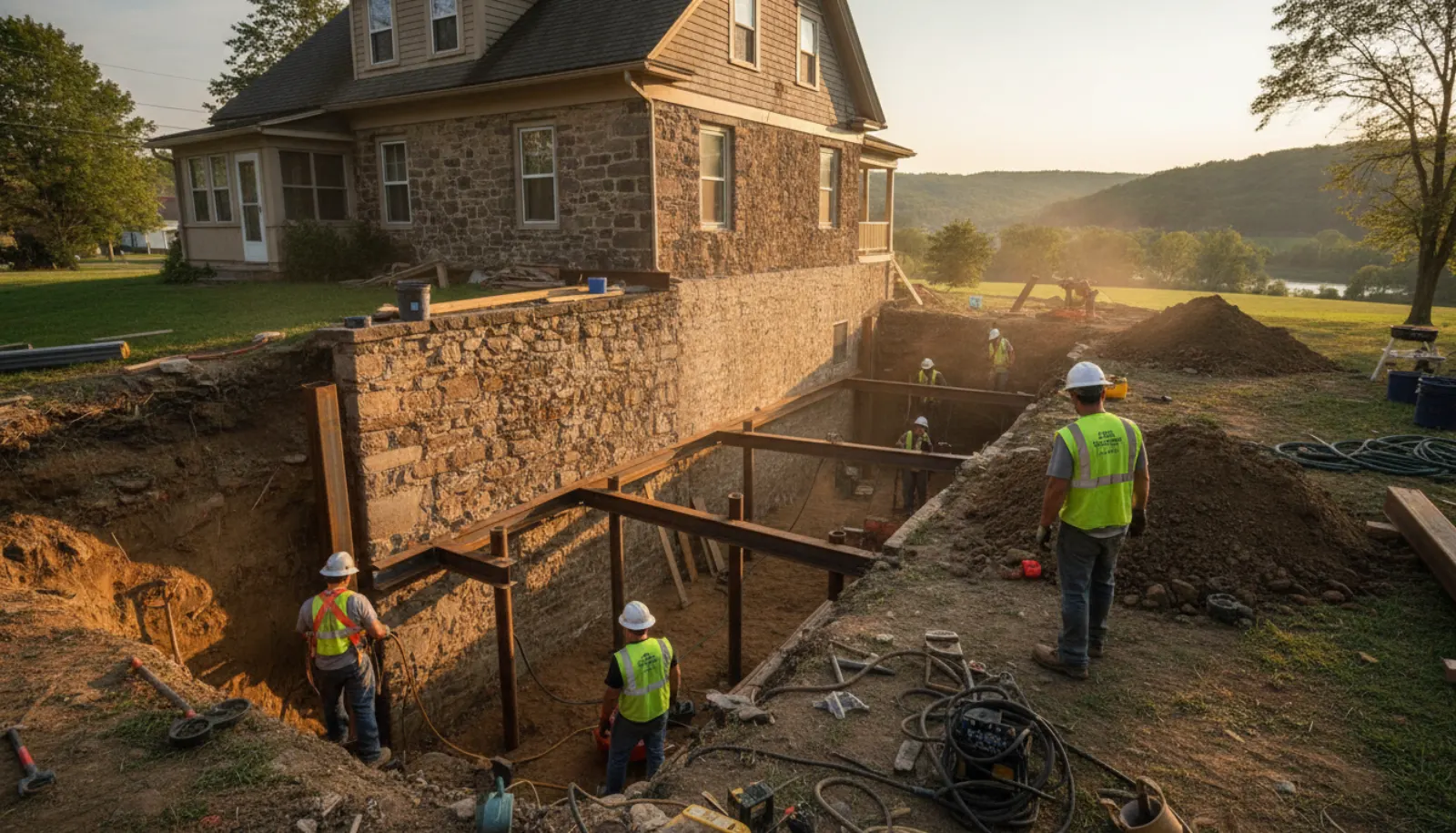
If the foundation has settled, steel piers can be driven to firmer soil to support that side.

Drying out the space

Drainage, a vapor barrier or a dehumidifier keeps the new wood from going soft.

What it costs

Typical national ranges from published cost guides. A few new posts cost far less than piers under a settled wall. Your written estimate will say which you need.

What to do before the inspection

  1. Set a marble or ball on the floor in each room and note which way it rolls.
  2. Lay a long level on the floor and photograph the bubble.
  3. Go to the basement and look at the posts and main beam. Note any that lean, crack or sit on dirt.
  4. Push a screwdriver into the wood where the beam sits on the wall. Soft wood is worth mentioning.
  5. Note any doors that stick and any new cracks upstairs, with dates.

Frequently asked questions

Is a sloping floor normal in an old house?

Some slope is common in a house built 100 years ago. Wood beams sag a little over time and the house settles in. What matters is whether it is getting worse, whether it bounces, and whether it comes with new cracks or sticking doors.

How much floor slope is too much?

There is no single rule for an old house. A marble that rolls is not a reason to panic. A slope you can feel when you walk, a dip in the middle of a room, or a slope that has grown over a few years should be checked.

Can sloping floors be fixed without lifting the house?

Often, yes. If the sag is in the beams and joists, the fix is in the basement or crawl space: new posts, a new beam, or new boards fastened alongside weak joists. Lifting a section of the house is for settled footings.

Can a floor be jacked back level all at once?

It is usually raised slowly, a little at a time. Raising an old floor too fast can crack plaster, tile and window frames upstairs.

Why does my floor slope toward the middle of the house?

A dip toward the center usually points to the main beam or the posts under it. Posts sitting on thin pads or bare dirt can sink, and an old beam can sag between posts.

Will I need a permit?

The City of Utica requires a building permit for construction costing $1,000 or more. Replacing beams and posts usually crosses that line, so the contractor should pull it.

Find out what is under the slope

Call (315) 322-9152 or send the short form. A local Utica crew will check the framing and the foundation and give you a written price to level it.

(315) 322-9152 Free inspection